



Energy and Power supply Equipment (air compressor/oxygen generator/pressurizer)
Category:
Product Introduction
Power supply equipment is the "lifeline" of industrial production, providing stable gas power, oxygen support, coal gas transportation, and water circulation protection for various process equipment.
I. Air Compressors
Technical Parameters
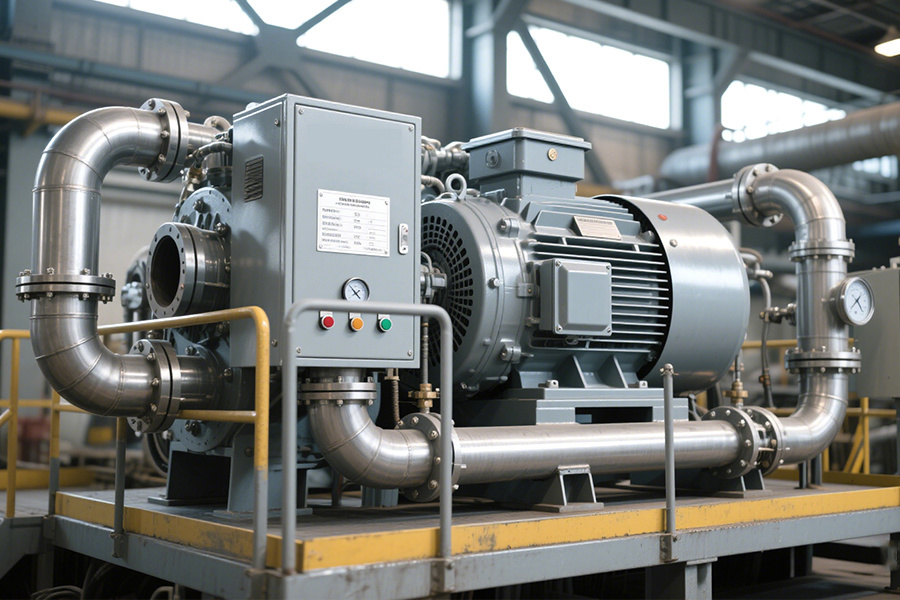
Discharge volume: 1 - 500m³/min, small machines (1 - 20m³/min) are suitable for workshop air supply, and large machines (100 - 500m³/min) are used for air separation units or the metallurgical industry.
Discharge pressure: 0.1 - 35MPa, low pressure (0.1 - 1.0MPa), medium pressure (1.0 - 10MPa), high pressure (10 - 35MPa), such as 1.0 - 2.0MPa for mining rock drilling and over 10MPa for hydrogen pipeline pressurization.
Motor power: 5.5 - 5000kW, the power of a screw compressor with a discharge volume of 50m³/min is about 250kW, and the power of a centrifugal compressor (200m³/min) reaches 1500kW.
Energy efficiency level: Level 1 energy efficiency (specific power consumption ≤5.8kW/m³/min@0.7MPa), Level 2 energy efficiency (≤6.2kW/m³/min), large units should prioritize Level 1 energy efficiency.
Equipment Selection Suggestions
Match according to gas demand and scenario:
General industrial air supply (workshop tools, instrument air): Select an oil-injected screw compressor (0.7 - 1.0MPa), with a discharge volume of 10 - 30m³/min. For example, a certain automobile factory is equipped with 3 20m³/min screw compressors, and the frequency conversion control saves 15% energy.
Air separation and high-pressure scenarios: Select a centrifugal compressor (30 - 500m³/min). The air separation unit requires 300m³/min@0.8MPa, and it is equipped with a steam turbine drive to adapt to continuous operation; for high-pressure nitrogen preparation, a diaphragm compressor (35MPa) is selected, used for hydrogen energy storage and transportation.
Energy-saving renovation needs: Replace old piston machines with permanent magnet frequency conversion screw machines. For example, replacing a 100kW piston machine with a 90kW frequency conversion screw machine can save 80,000 kWh of electricity per year.
II. Oxygen Generators

Technical Parameters
Oxygen production: 50 - 50000Nm³/h, small (50 - 1000Nm³/h) for medical/chemical use, large (10000 - 50000Nm³/h) for metallurgy/air separation.
Oxygen purity: 90% - 99.999%, industrial oxygen (99.2%), medical oxygen (99.5%), high-purity oxygen (99.99%), electronic grade oxygen (99.999%).
Operating pressure: 0.1 - 3.0MPa, oxygen production pressure of air separation unit 0.8 - 1.2MPa, medical oxygen generator 0.3 - 0.5MPa.
Energy consumption index: For large air separation equipment, the electricity consumption per ton of oxygen is ≤0.35kWh/Nm³ (purity 99.6%), and for small PSA oxygen generators, the electricity consumption per ton of oxygen is 0.5 - 0.8kWh/Nm³.
Equipment Selection Suggestions
Select according to output, purity, and application scenario:
Iron and steel metallurgy and large-scale industry: Select cryogenic air separation oxygen generators (10000 - 50000Nm³/h). For example, a certain steel plant is equipped with a 30000Nm³/h air separation unit, producing 99.6% oxygen for converter oxygen blowing, with an electricity consumption of 0.32kWh per ton of oxygen.
Chemical/medical/distributed scenarios: Select PSA (pressure swing adsorption) oxygen generators (50 - 5000Nm³/h). Hospitals use 50Nm³/h equipment to produce 93% medical oxygen, and the food industry selects 100Nm³/h equipment to produce 90% oxygen for preservation.
High-purity oxygen demand: Select VPSA type oxygen generators (purity 99.99%) or air separation + purification system. Oxygen used for cleaning in the electronics industry requires 99.999% purity, equipped with a low-temperature distillation column and a catalytic hydrocarbon removal device.
III. Coal Gas Boosters

Technical Parameters
Transportation flow rate: 500 - 100000Nm³/h, small (500 - 10000Nm³/h) for kiln gas supply, large (20000 - 100000Nm³/h) for steel plant coal gas pipeline network.
Boosting range: 5 - 50kPa, low pressure (5 - 15kPa) for burner gas supply, medium pressure (15 - 30kPa) for rolling mill heating furnace, high pressure (30 - 50kPa) for coal gas power generation.
Motor power: 30 - 2000kW, the power of a centrifugal booster with a flow rate of 10000Nm³/h@20kPa is about 315kW.
Sealing type: Labyrinth seal (clean coal gas), water seal/dry gas seal (dusty coal gas), coke oven coal gas booster requires explosion-proof motor (Ex d IIBT4).
Equipment Selection Suggestions
Configure according to coal gas type and pressure requirements:
Steel plant coal gas pipeline network: Select centrifugal coal gas booster (20000 - 50000Nm³/h). For example, blast furnace coal gas is pressurized to 30kPa for hot blast furnace, and 2 50000Nm³/h units (one main and one backup) are configured, with impeller material resistant to CO corrosion.
Industrial kilns and gas turbines: Select Roots type booster (500 - 10000Nm³/h). Natural gas is pressurized to 15kPa for boiler combustion, and a three-lobe Roots blower (flow rate 5000Nm³/h) is selected, with noise ≤85dB.
Special coal gas scenarios: For converter coal gas pressurization, select an anti-ash type centrifugal fan (blades can be disassembled for cleaning); for biomass coal gas pressurization, select a water ring vacuum pump (suitable for water vapor conditions).
IV. Water Treatment Equipment (Circulating Water Pump Station/Cooling Tower)
1. Circulating Water Pump Station

Technical Parameters
Flow range: 100 - 10000m³/h, small pump station (100 - 1000m³/h) for workshop cooling, large pump station (5000 - 10000m³/h) for steel plant continuous casting.
Head range: 10 - 150m, equipment cooling requires 10 - 30m head, high-rise building water supply requires 50 - 150m.
Motor power: 15 - 2000kW; the power of a centrifugal pump with a flow rate of 2000m³/h@30m head is approximately 250kW.
Pump type structure: horizontal centrifugal pump (large flow rate), vertical centrifugal pump (small footprint), multi-stage pump (high head). Pumps used in steel plant continuous casting require wear-resistant materials (cast iron + ceramic coating).
Equipment Selection Suggestions
Industrial circulating water system: select horizontal centrifugal pumps (flow rate 500 - 5000m³/h). For example, a rolling mill cooling water pump station is equipped with 3 2000m³/h pumps (two in operation, one standby), with variable frequency control to adapt to load fluctuations.
High-rise buildings and long-distance water transmission: select multi-stage centrifugal pumps (head 50 - 150m). For urban water supply pump stations, select a 10-stage centrifugal pump (head 120m), with a pressure vessel to reduce water hammer effects.
Special operating condition requirements: seawater circulating pumps select duplex stainless steel material (resistant to chloride ion corrosion); high-temperature circulating pumps (medium temperature ≥120℃) select mechanical seals + cooling flushing system.
2. Cooling Tower

Technical Parameters
Cooling capacity: 50 - 50000kW; small ones (50 - 1000kW) are used for air conditioning cooling, and large ones (10000 - 50000kW) are used for industrial circulating water.
Inlet and outlet water temperature difference: 5 - 15℃; standard operating conditions (inlet 37℃/outlet 32℃), high-temperature operating conditions (inlet 50℃/outlet 35℃).
Cooling efficiency: evaporation accounts for 1.5% - 3% of the circulating water volume; fan power 5 - 500kW; a 5000kW cooling tower is equipped with 2 30kW fans.
Noise index: open cooling tower ≤75dB (10m from the tower), closed cooling tower ≤65dB; low-noise type should be selected for residential areas.
Equipment Selection Suggestions
Industrial production cooling: select open cross-flow cooling towers (5000 - 50000kW). For example, a 20000kW cooling tower used in steel plant continuous casting, with PVC inclined wave fillers, achieves 90% cooling efficiency.
High water quality requirements: select closed cooling towers (50 - 10000kW). The circulating water is isolated from the air, suitable for lubricating oil and hydraulic oil cooling. A 1000kW closed tower is used for lubricating oil cooling of a steam turbine in a certain power plant, with 316L stainless steel heat exchange tubes.
Environmental protection and space limitations: select ultra-low noise cooling towers (≤60dB). A 500kW tower is used for air conditioning cooling in urban commercial centers, equipped with noise-reducing louvers; for rooftop installation, select square cooling towers (small footprint); round towers have low wind resistance and are suitable for outdoor use.
Selection Combination Suggestions
Steel plant power station: centrifugal air compressor (200m³/min@0.8MPa) + 30000Nm³/h air separation oxygen generator + centrifugal gas compressor (50000Nm³/h@30kPa), equipped with a 5000m³/h circulating water pump station and a 20000kW cooling tower to meet the power needs of steelmaking and rolling.
Industrial park distributed energy: screw air compressor (50m³/min) + 2000Nm³/h PSA oxygen generator + Roots gas compressor (10000Nm³/h@15kPa); the circulating water system selects a 1000m³/h closed cooling tower, suitable for multi-user distributed gas supply.
Hospital/data center protection: oil-free screw air compressor (30m³/min@0.7MPa) + 50Nm³/h medical oxygen generator + variable frequency circulating water pump (100m³/h@30m); the cooling tower selects a low-noise type (≤65dB) to meet the requirements of level 1 load reliability.
Online Consultation
Dedicated to provide you with quality products and professional services, please keep the phone open, we will contact you as soon as possible, thank you for your support!
Related Products
Key words:



Contact Information
Yangqu Industrial Park, Shanxi Transformation and Comprehensive Reform Demonstration Zone

Mobile Website