


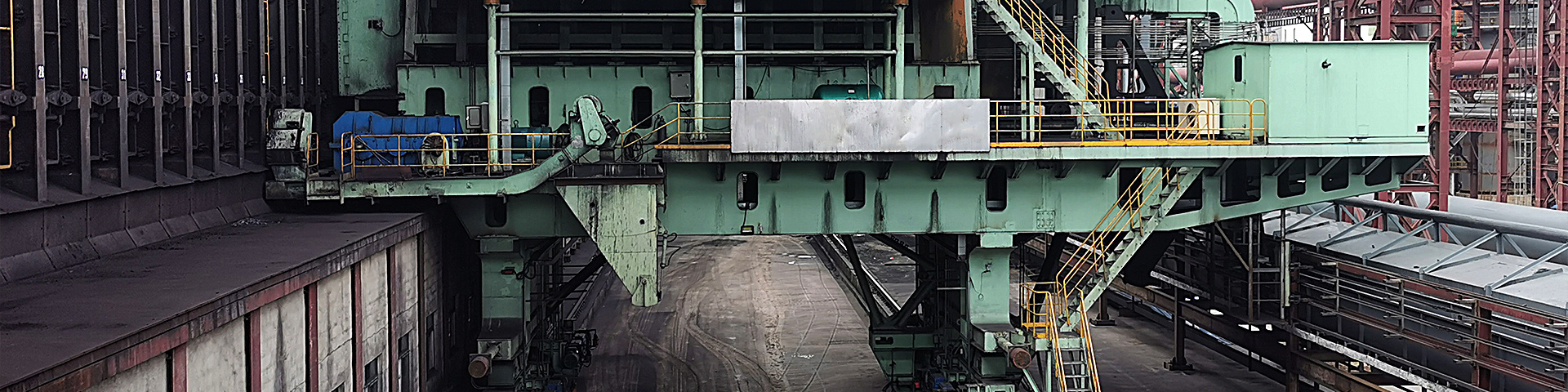

Grinding and beneficiation equipment
Category:
Product Introduction
Grinding and beneficiation equipment is the core equipment for the efficient development and comprehensive utilization of iron ore resources, playing a key role in improving concentrate quality, reducing production costs, and promoting sustainable industrial development.
Grinding Equipment
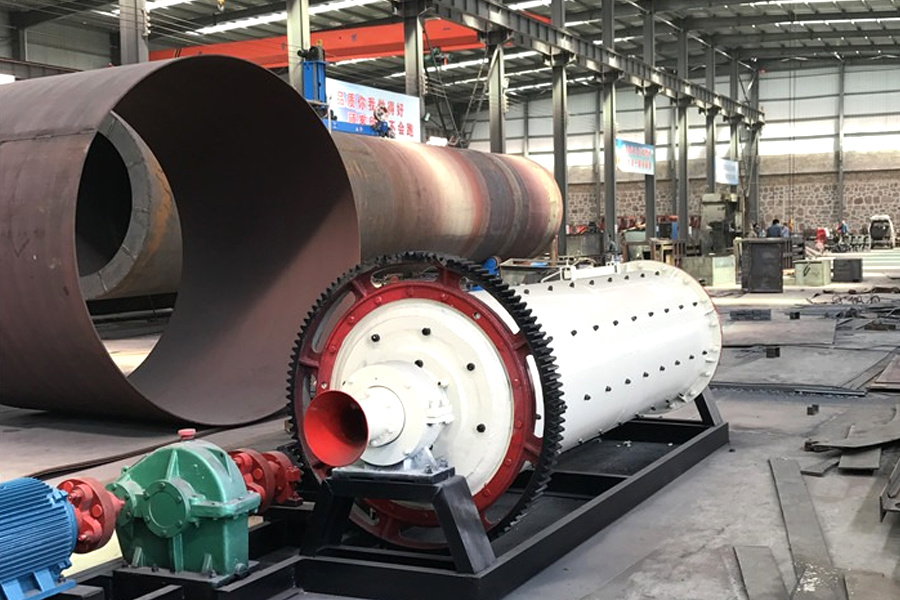
• Ball mill
This equipment adopts a horizontal cylindrical structure, filled with grinding media (steel balls) of different specifications. Through the rotation of the cylinder, the steel balls impact and grind the iron ore. The ball mill can precisely control the grinding fineness, producing pulp with uniform particle size to meet the stringent requirements of subsequent beneficiation processes. Its modular design facilitates maintenance and upgrades, and its high efficiency and energy saving features effectively reduce operating costs. It is suitable for iron ore beneficiation plants of all scales, and performs particularly well in processing iron ores with complex mineral compositions.
• Rod mill
This equipment does not require additional grinding media; it uses the self-impact and friction of the ore within the cylinder to achieve grinding. The autogenous mill has a strong processing capacity and can directly process large chunks of raw ore, simplifying the crushing and grinding process and reducing infrastructure investment and operating costs. Its intelligent control system can monitor the operating status in real time to ensure efficient and stable operation. In large open-pit iron ore projects, the application of autogenous mills has significantly improved the production efficiency and economic benefits of grinding operations, making it key equipment for promoting green and low-carbon development in the iron and steel industry.


• Autogenous mill
With its innovative "ore-on-ore grinding" concept, the autogenous mill provides a new, highly efficient and energy-saving solution for iron ore grinding. This equipment does not require additional grinding media; it uses the self-impact and friction of the ore within the cylinder to achieve grinding. The autogenous mill has a strong processing capacity and can directly process large chunks of raw ore, simplifying the crushing and grinding process and reducing infrastructure investment and operating costs. Its intelligent control system can monitor the operating status in real time to ensure efficient and stable operation. In large open-pit iron ore projects, the application of autogenous mills has significantly improved the production efficiency and economic benefits of grinding operations, making it key equipment for promoting green and low-carbon development in the iron and steel industry.

| Equipment Type |
Core Principle |
Typical Minerals |
Advantageous Scenarios |
| Ball mill |
Steel ball impact + grinding |
Ores of various hardnesses |
Medium and fine grinding, large-scale production |
| Rod mill |
Steel rod line contact grinding |
Ores requiring uniform particle size |
Coarse grinding, preventing over-grinding |
| Autogenous mill |
Ore self-grinding |
Medium hardness, fractured ores |
No media, simplified process |
| Flotation machine |
Hydrophobicity of mineral surface |
Fine-grained sulfide ores, non-metallic ores |
Multi-metal sorting, low-grade ores |
| Magnetic separator |
Difference in mineral magnetism |
Magnetite, hematite, manganese ore |
Efficient separation of magnetic minerals, environmentally friendly |
| Gravity separator |
Difference in mineral density |
Tungsten, tin, gold, iron ore |
Coarse-grained, high-grade ores, reagent-free separation |
Selection Suggestions
Hardness Priority:
Hard ores (such as iron ore, quartzite) → Ball mill (wear-resistant, large crushing ratio).
Medium-hard or easily broken ores (such as copper ore, limestone) → Autogenous mill / semi-autogenous mill (simplified process).
Avoid Over-grinding:
Rare metal ores or scenarios with high requirements for particle size uniformity → Rod mill (line contact grinding, reducing over-grinding).
Scale and Cost:
Large beneficiation plants → Autogenous mill (high initial investment, but long-term savings in media and maintenance costs).
Small and medium-sized production lines → Ball mill or rod mill (high flexibility, lower investment).
Beneficiation Equipment
• Flotation machine
The flotation machine is the core beneficiation equipment for the effective separation of iron ore and gangue minerals, and is widely used in iron ore flotation operations worldwide. This equipment adds specific flotation reagents to the pulp, making the surface of the target minerals hydrophobic. Under the action of stirring and aeration, the minerals adhere to the surface of the bubbles and float to the surface of the pulp to form a foam layer, thus achieving separation from the gangue minerals. The flotation machines provided by our company have a highly efficient stirring and aeration system that can precisely control the pulp flow and bubble size to ensure effective mineral flotation. Its modular design facilitates flexible configuration according to different beneficiation process requirements, significantly improving the grade and recovery rate of iron concentrate. It has obvious advantages in processing fine-grained disseminated and complex refractory iron ores, and has been successfully applied to numerous international beneficiation projects.
• Magnetic separator
Based on the magnetic difference of iron ore, the magnetic separator achieves efficient separation of iron ore and non-magnetic minerals, and is an indispensable key equipment in the iron ore beneficiation field. Our magnetic separators use high-performance magnetic materials and advanced magnetic circuit design to generate high-intensity, high-gradient magnetic fields that can effectively capture weakly magnetic iron ores. The equipment features high processing capacity, high separation precision, and stable operation. Various types, such as dry magnetic separation and wet magnetic separation, can be provided according to different ore properties and production requirements. In the beneficiation of weakly magnetic iron ores such as hematite and limonite, magnetic separators, combined with other beneficiation processes, significantly improve the quality of iron concentrate, reduce the grade of tailings, and improve the comprehensive utilization rate of resources, gaining wide recognition in the international iron and steel market.
• Gravity separator
Gravity separators utilize the density difference between ore and gangue minerals for separation, offering unique advantages when processing coarse-grained, well-liberated iron ore. The equipment leverages gravity and hydrodynamic forces to stratify and separate minerals of different densities. Our gravity separators employ an innovative separation structure and precise water flow control system to achieve accurate mineral particle separation, effectively improving iron concentrate recovery rate and grade. Its simple structure, easy operation and maintenance, and low operating costs make it particularly suitable for small mines and mining projects with high environmental requirements.
| Type |
Separation Basis |
Applicable Particle Size |
Typical Minerals |
Core Differences in Advantages and Disadvantages |
| Flotation machine |
Surface Hydrophobicity Difference |
Fine (<0.2mm) |
Sulfide ores, non-metallic ores (such as graphite) |
Fine separation, requires reagents, complex process |
| Magnetic separator |
Difference in Magnetic Strength |
Coarse - Fine Particles |
Magnetite, ilmenite |
No reagents, efficient, only suitable for magnetic minerals |
| Gravity separator |
Density (Specific Gravity) Difference |
Coarse - Microfine Particles |
Tungsten, tin, gold, coal |
No reagents, low cost, relies on density difference and low efficiency for fine particles |
Selection Suggestions
Mineral Properties Priority:
Containing sulfide ores or requiring fine particle separation (such as copper-gold ore) → Flotation machine (requires supporting reagent system).
Strongly magnetic minerals (such as magnetite) → Magnetic separator (simple process, low cost).
Coarse minerals with large density difference (such as placer gold ore, tungsten ore) → Gravity separator (no reagents, suitable for pre-selection).
Particle Size Matching:
Coarse (>2mm) → Gravity jig or magnetic pre-selection machine;
Fine (<0.2mm) → Flotation or centrifugal gravity separator.
Environmental Protection and Cost:
High environmental requirements or scenarios where reagents are prohibited → Magnetic separation, gravity separation;
Low-grade fine-grained ore → Flotation (although reagent costs are high, the separation efficiency is irreplaceable).
Online Consultation
Dedicated to provide you with quality products and professional services, please keep the phone open, we will contact you as soon as possible, thank you for your support!
Related Products
Key words:



Contact Information
Yangqu Industrial Park, Shanxi Transformation and Comprehensive Reform Demonstration Zone

Mobile Website