



Rolling mill
Category:
Product Introduction
Rolling Mill Unit Introduction
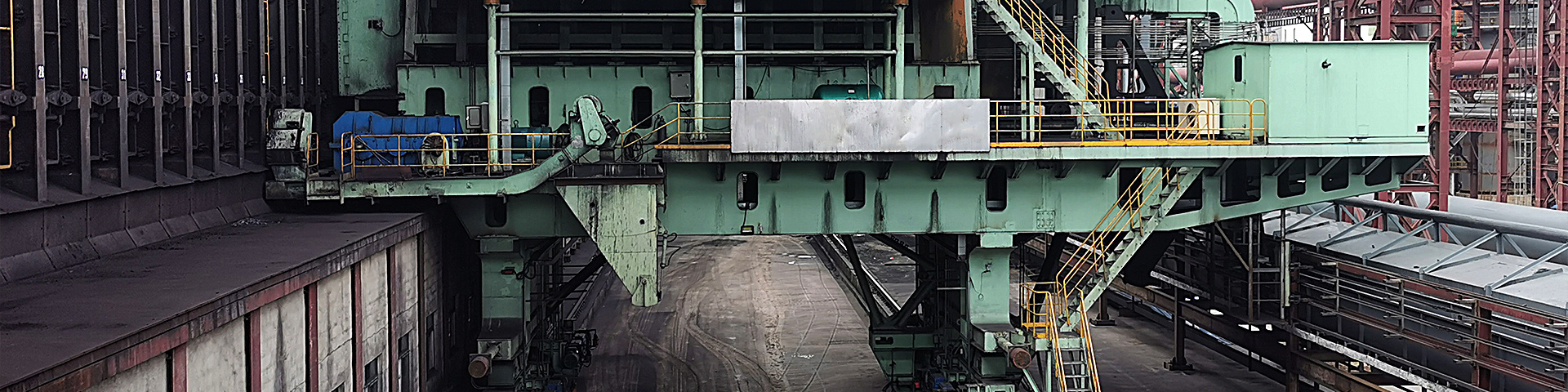
In the steel production process, the rolling mill unit, as the core equipment, is responsible for the heavy task of rolling and deforming heated steel billets into steel products with specific shapes, sizes, and properties.
Two-Roll Mill
Technical Parameters
Roll diameter range: Common roll diameters range from 200 to 1500 mm. For example, small two-roll mills may have roll diameters of 200-500 mm, while large primary mills can reach 1500 mm.
Roll body length: Varies from 1000 to 3500 mm depending on production needs. Two-roll mills used for thin plate rolling have shorter roll bodies, while those for medium and thick plates require longer roll bodies.
Rolling speed: Typically 0.5-7 m/s. Thin plate cold rolling is slower, such as 0.5-2 m/s; medium and thick plate hot rolling is relatively faster, reaching 3-7 m/s.
Rolling force: Generally 500-5000 kN. It varies with roll diameter, roll body length, and rolling material. Large two-roll primary mills can exceed 5000 kN.
Equipment Selection Suggestions
Suitable for the initial processing of metal rolling and scenarios with relatively low product precision requirements. For example, small steel mills producing rebar for construction can use a two-roll mill with a roll diameter of around 500 mm and a roll body length of 1500 mm to meet the rough rolling needs of steel billets. Its simple structure, low cost, and easy maintenance can reduce the company's initial investment and operating costs. If producing medium and thick plates, a large reversible two-roll mill can be chosen, which can adapt to large reductions and has strong compatibility with different specifications of steel billets.

Three-Roll Mill
Technical Parameters
Upper and lower roll diameter: Generally larger, at 300-1000 mm, are the active rolls, driven by a motor.
Middle roll diameter: Relatively smaller, at 200-600 mm, driven by friction from the upper and lower rolls.
Roll body length: 500-2000 mm, determined by the size of the product.
Rolling speed: 0.3-2 m/s, relatively low due to the driven middle roll and equipment structure.
Rolling force: 300-3000 kN, generally less than the same specification two-roll mill due to the small middle roll diameter.
Equipment Selection Suggestions
Often used in medium plate production, such as producing 4.0-20 mm medium plates, or as a roughing mill in a two-machine arrangement. It has low equipment investment, fast factory construction, and the roll system rigidity is greater than that of a reversible two-roll mill, resulting in slightly higher product precision. For example, medium-sized steel enterprises producing ordinary medium plates can use a φ500×1500 three-roll mill to achieve good economic benefits while ensuring a certain production efficiency. However, due to the weak bite-in ability of the middle roll, complex equipment structure, and large maintenance workload, its application scenarios are gradually limited.

Four-Roll Mill
Technical Parameters
Work roll diameter: Smaller, 100-400 mm, directly contacts and rolls the workpiece.
Backup roll diameter: Larger, 400-1200 mm, used to support the work roll and improve mill rigidity.
Roll body length: 800-3000 mm, designed according to product width.
Rolling speed: 1-15 m/s, can achieve high-speed rolling in both cold and hot rolling.
Rolling force: 1000-10000 kN, can withstand greater rolling loads because the backup rolls share the rolling force.
Equipment Selection Suggestions
Widely used in high-precision sheet rolling, such as the production of automotive sheets and appliance sheets. It has high rigidity and precision, and can effectively control the shape and thickness tolerance of the sheet. When large steel joint ventures produce high-end thin plates, they use a four-roll cold rolling mill with a work roll diameter of 200 mm, a backup roll diameter of 800 mm, and a roll body length of 2000 mm, combined with an advanced shape control and automatic thickness control system, to produce high-precision, high-quality thin plate products.
Reversible Mill
Technical Parameters
Rolling speed: The bite-in speed is low, 0.3-1 m/s, and the stable rolling speed depends on the mill type and product requirements, ranging from 1-10 m/s.
Rolling force: Related to the mill roll system structure and size, ranging from 500-10000 kN.
Motor power: Because frequent forward and reverse rotation is required, the motor power is large, 100-5000 kW.
Reduction accuracy: Using advanced hydraulic or electric reduction systems, the reduction accuracy can reach ±0.01-±0.1 mm.
Equipment Selection Suggestions
Suitable for the production of multi-variety, small-batch steel, and the rolling of medium and thick plates with high product quality requirements. For example, special steel plants producing special alloy steel medium and thick plates can use a four-roll reversible mill, which can perform back-and-forth rolling on the same mill, flexibly adjusting rolling process parameters to meet the rolling needs of different steel grades and specifications. At the same time, the reversible mill can ensure product quality by configuring high-precision shape and thickness control systems.

Continuous Rolling Mill
Technical Parameters
Rolling speed: High-speed continuous rolling mills can reach rolling speeds of 10-30 m/s to improve production efficiency.
Output: Annual output depends on the mill scale and product specifications, ranging from 100,000 to 1 million tons.
Coiler control accuracy: To ensure the stability of the continuous rolling process, the coiler height control accuracy can reach ±5-±10 mm.
Automation level: Equipped with an advanced automated control system to achieve fully automated operation.
Equipment Selection Suggestions
Suitable for mass production of single-variety steel, such as construction steel and general plates. Large steel enterprises producing hot-rolled strip steel use tandem mills consisting of multiple rolling mills. By reasonably allocating the reduction and speed of each stand, efficient and continuous production can be achieved, significantly improving production efficiency and product quality stability. Tandem mills require a complete automated control system to ensure the smooth progress of the rolling process.

Finishing Mill
Technical Parameters
Work roll precision: Roundness error is controlled within ±0.001 - ±0.005mm, and surface roughness Ra can reach 0.05 - 0.1μm.
Rolling force control accuracy: Using an advanced AGC (automatic gauge control) system, rolling force fluctuation is controlled within ±1% - ±3%.
Plate shape control capability: Through plate shape control methods such as bending rolls and shifting rolls, the plate shape deviation can be controlled within ±5 - ±10I (international units).
Product accuracy: Thickness tolerance can reach ±0.01 - ±0.05mm, width tolerance ±1 - ±3mm.
Equipment Selection Suggestions
Used for rolling products with extremely high requirements for steel dimensions, surface quality, such as automotive panels and precision strips for electronics. Enterprises specializing in the production of high-end plates use finishing mills equipped with high-precision work rolls and advanced plate shape and thickness control systems to produce high-quality and high-precision products to meet the needs of the high-end market. Finishing mills are often used in conjunction with roughing mills and intermediate mills to form a complete rolling production line.


Online Consultation
Dedicated to provide you with quality products and professional services, please keep the phone open, we will contact you as soon as possible, thank you for your support!
Related Products



Contact Information
Yangqu Industrial Park, Shanxi Transformation and Comprehensive Reform Demonstration Zone

Mobile Website